


Reliable data is the backbone of science, but how to go about obtaining it hasn’t always been so clear. This blog will discuss GLP compliance and how Adam’s analytical balances fit in.
What is GLP Compliance?
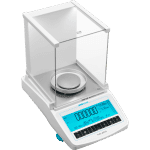
GLP stands for Good Laboratory Practices. It’s a set of guidelines developed for non-clinical studies to ensure that the data involved is high-quality, controlled and traceable. A GLP-compliant analytical balance, like Adam’s new , will provide the necessary information for your weight data to meet all the expected criteria when it’s printed. This includes tracking the date and time that the result was produced and noting the weighing device’s ID.
What is an Analytical Balance?
Analytical balances are a type of highly precise balance that typically offer four-place readabilities (0.0001g / 0.1mg). They’re common staples in laboratories of any kind, helping to calibrate pipettes, weigh chemicals, liquids, samples, perform quality control, etc.
Why do Analytical Balances Need GLP Compliance?
It’s important to note that GLP isn’t exclusive to analytical balances. Semi-micro and precision balances can also be GLP compliant. However, because analytical balances are most often used in laboratories, it’s critical for them to abide by GLP standards.

Data Integrity
The number one goal for the Good Laboratory Practice guidelines is to help laboratories. Specifically, help them obtain and manage data in ways that help guarantee their studies are high-quality, traceable and reproducible. An analytical balance that is GLP-compliant makes that job much easier. It records and prints the necessary information on your behalf.
Calibration & Performance Checks
GLP doesn’t have a set frequency for how often you should perform calibration or maintenance. This is because it really depends on your application and how often you use your balance. In general, GLP guidelines recommend calibrating as frequently as it takes to assure data validity. Adam interprets this as being often, and particularly before important weighing sessions.

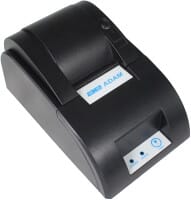
GLP guidelines do, however, expect that you record calibration and maintenance thoroughly. Your records should include when the calibration and maintenance were performed, on which balance, and by whom. Many Adam analytical balance models offer both internal and external calibration to make the process easier. When paired with a printer, they can also provide a hard copy of the results when calibration is complete.
Traceability
Traceability is another one of the core goals of the Good Laboratory Practice guidelines. Studies that comply with GLP standards must be repeatable. If a South African laboratory follows GLP guidelines correctly, a lab anywhere else in the world should be able to reconstruct their study and (ideally) reach similar results. How? Traceable data.
The reason that Adam’s GLP-compliant analytical balances record the date, time and device ID alongside every weight reading is to make them traceable. When you have thorough records of weight data, you can verify that your balance had been recently calibrated, maintained and was suitable for the task at hand when the weight reading was recorded.
You might notice at some point that some of your weight readings are a bit off, not quite typical or what you expected. Before trusting those results, you can track down the exact balance providing the data to investigate if it was a user, calibration or machinery error – or simply valid data that you didn’t anticipate. This is one of the most critical uses of GLP-compliant weight readings, as the longer you allow a balance to be inaccurate, the more problems can snowball throughout the rest of the lab and your study.
Reduced Human Error
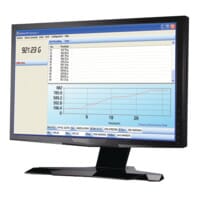
While GLP guidelines don't discourage you from copying raw data (like weight readings and calibration records) into a physical notebook, it's not the preferred technique, either. Mainly because the risk of transcription errors is higher than if you printed or transferred the data to a data collection software like .
Key Features to Look for in a GLP Compliant Analytical Balance
When you’re shopping around for a GLP compliant analytical balance, you’ll want to keep an eye out for these two features.
Connectivity
Because copying weight and calibration data into a notebook is at a higher risk of transcription errors, you need a way to get that data down accurately. You have a few different options, but all of them are easier when your analytical balance offers a variety of connectivity options.

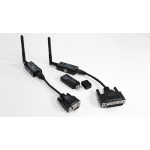
Adam’s new offers Ethernet, Bluetooth®, RS-232 and USB interfaces as standard, ideal for connecting to any PC, LIMS or printer. For analytical balances that don’t offer standard Bluetooth, the accessory is a plug-and-play solution. Using an available RS-232 or USB interface, you can connect a sender to a Bluetooth receiver for instant communication over Bluetooth.
Multi-User Operation
GLP guidelines may require a record of the device ID, but that doesn’t necessarily narrow down who obtained each result. Inconsistent operator technique can be a problem that sneaks up on you, so you want to be aware of who is gaining what results. Luckily, Adam’s analytical balances all feature the ability to set up password-protected user-profiles. You’ll then know who’s responsible for each result.
Consequences of Non-Compliance
Laboratories that don’t comply with Good Laboratory Practice guidelines are more likely to:
- Obtain inaccurate test results. This could have disastrous consequences depending on what your lab is studying, including the harm of human or animal subjects.
- Suffer fines, sanctions or even closures. This can drastically harm you and your lab’s reputation.
Help yourself out! Invest in a GLP compliant analytical balance. Need help choosing which one to purchase? Contact the Adam team - we’ll help you find the answer.