


Meat and seafood products rarely come in identical sizes, making fixed pricing harder for retailers, processors and distributors. Instead, these products are often sold using catch weight, where the final price is determined by the item's exact weight. Why is accurate weighing so important for the meat and seafood industries? Let’s discuss.
What is Catch Weight?
Packaged products such as cereal or pasta are consistent weights from box to box thanks to their filling process, allowing them to be priced at a fixed rate. However, some foods have natural variations in weight that make it less fair to price them the same every time.
To solve this, a variable product such as a cut of salmon is priced according to its exact weight, called its catch weight. For example, the catch weight of a cut of salmon might be 450g. If you sell that for £20.00 per kilogram, your customer will pay £9.00.
How Are Catch Weight Products Priced?
You’re legally obligated to use a trade-approved weighing scale when pricing products by weight. When a weighing scale is trade-approved, it’s undergone extra testing to guarantee it’s accurate enough for commercial use.

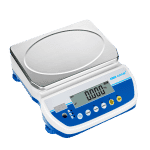
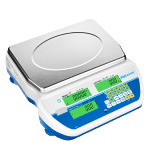
Adam offers a variety of legal-for-trade weighing scales that will all do the job effectively, but we recommend the NSF approved for extra ease. The Swift can store up to 161 products and their associated prices by weight in its memory, allowing you to recall them with the tap of a button, weigh the item, and receive an accurate price for the customer to pay – saving time and effort!
What Makes an Accurate Weighing Scale?
If your scale meets these requirements, it’s likely that you can trust the accuracy of your results:
- Trade approved for your region & inspected by the governing jurisdiction regularly
- Calibrated often (after moving and according to your quality procedures)
- On a stable, level surface away from vibrations
- Offers a readability at one level more precise than you might truly need
- e.g. if you need results to 0.01g, invest in a scale with a readability of 0.001g
- Out of direct sunlight
- Cleaned regularly
These points cover most of the areas you should keep an eye on throughout the use of your scale to ensure it stays accurate.
Common Catch-Weight Products
You’ll likely come across catch-weight products every time you go to the grocery store. The list includes:
- Seafood - including salmon, lobster, oysters
- Cuts of beef and pork - such as ground beef or bacon
- Specialty cheeses and deli items - slices or blocks of mozzerella or sliced salami
- Produce (though not a meat or seafood) - tomatoes, bananas, apples, peppers, etc.

We’re so used to catch weight in our day-to-day lives that we’ll compare the price of two packs of salmon 250g of cheese at the deli without even thinking about it. We rely on our grocery stores to use reliable weighing scales and provide accurate, trustworthy prices.
Why Accurate Weighing Matters
What’s so important about using an accurate weighing scale for pricing catch-weight products?
1. Fair Pricing for Customers
Businesses thrive when customers are confident enough to keep coming back for more. To build that confidence, providing a fair price is critical. People want to get what they paid for, no more and no less. An accurate weighing scale ensures that they do, down to the penny.
2. Protecting Profit Margins
Of course, it can’t all be about the customer – you need to protect your interests too. If your weighing scale isn’t accurate, you could be giving away product without receiving your due compensation. Small weighing inaccuracies add up overtime, reducing your overall revenue. On the other hand, if you’re overweighing, you might be at risk of compliance issues or customer complications.
3. Maintaining Product Consistency
Let’s say you sell steaks to restaurants direct from your butcher’s shop. Each restaurant isn’t necessarily going to be charging their customers for their steak dinner by exact weight. So, while you can’t guarantee that each steak is going to be 300g exactly, a weighing scale helps you maintain as much consistency as possible. This guarantees that your working relationship with each restaurant stays healthy!
4. Compliance With Trade Regulations
You can get in major legal trouble if you’re found out to have been using an inaccurate weighing scale to weigh and price your products. You could suffer fines or even, in serious cases, jail time.
Unique Weighing Challenges in Meat & Seafood
Weighing meat and seafood comes with unique challenges. You can circumvent many of them by choosing the right weighing scale.
Wet & Harsh Environments
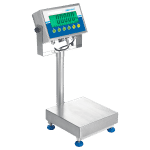
Working with meat and seafood often means that you’re dealing with a lot of moisture getting everywhere. To make it worse, that moisture is a breeding ground for bacteria. You need a trade-approved weighing scale that can handle both the harsh environment and the thorough clean-up afterward. We recommend the series of bench and floor scales. They’re IP68 rated so you can get accurate results before, after and even during the cleaning process.
Fast-Paced Operations
A scale’s stabilisation time represents how long it takes for your results to settle after an item is placed on the pan. The faster the stabilisation time, the faster your operations! Adam NSF-approved stabilize in just one second, saving you time and helping your operations move smoothly.
Consistency
It can be difficult to get products as consistent as possible, but some weighing scales offer a checkweighing function, which can make it easier. Checkweighing lets you set high and low weight limits in your scale, so it will notify you (whether via sound, lights or a colour changing backlight) whether your item is above, below or within those limits. If a product is above or below, it might be placed in a different pricing category! Adam’s Gladiator Approved Scales boast a colour-changing display for easy visibility.

Connectivity
If the weights aren’t recorded, did they even happen? A weighing scale with connectivity options such as RS-232 or USB can help you keep track of your results. You can connect to a printer for real-time weighing records so you can log weights and even catch issues before they truly become issues.
Want to catch the right scale to calculate catch weight? Contact Adam. We have the answers for you.